
Claude Lévi-Strauss: movies and series
- Known for
- Acting
- Born
- 28 November 1908, Brussels, Belgium
- Died
- 30 October 2009
Claude Lévi-Strauss (28 November 1908 – 30 October 2009) was a French anthropologist and ethnologist, born in Belgium to French-Jewish parents living in Bruxelles, whose work was key in the development of the theories of structuralism and structural anthropology. He held the chair of Social Anthropology at the Collège de France between 1959 and 1982, was elected a member of the Académie française in 1973 and was a member of the School for Advanced Studies in the Social Sciences in Paris. He received numerous honors from universities and institutions throughout the world. Lévi-Strauss argued that the "savage" mind had the same structures as the "civilized" mind and that human characteristics are the same everywhere. These observations culminated in his famous book Tristes Tropiques (1955) that established his position as one of the central figures in the structuralist school of thought. As well as sociology, his ideas reached into many fields in the humanities, including philosophy. Structuralism has been defined as "the search for the underlying patterns of thought in all forms of human activity." He won the 1986 International Nonino Prize in Italy. Gustave Claude Lévi-Strauss was born in 1908 to French-Jewish (turned agnostic) parents who were living in Brussels at the time, where his father was working as a portrait painter. He grew up in Paris, living on a street of the upscale 16th arrondissement named after the artist Claude Lorrain, whose work he admired and later wrote about. During the First World War, from age 6 to 10, he lived with his maternal grandfather, who was the rabbi of (the synagogue of) Versailles. Despite his religious environment early on, Claude Lévi-Strauss was an atheist or agnostic, at least in his adult life. From 1918 to 1925 he studied at Lycée Janson de Sailly middle school, receiving a baccalaureate in June 1925 (age of 16). In his last year (1924), he was introduced to philosophy, including the works of Marx[citation needed] and Kant, and began shifting to the political left (however, unlike many other socialists, he never became communist). From 1925, he spent the next two years at the prestigious Lycée Condorcet preparing for the entrance exam to the highly selective École normale supérieure. However, for reasons that are not entirely clear, he decided not to take the exam. In 1926, he went to Sorbonne in Paris, studying law and philosophy, as well as engaging in socialist politics and activism. In 1929, he opted for philosophy over law (which he found boring), and from 1930 to 1931, put politics aside to focus on preparing for the agrégation in philosophy, in order to qualify as a professor. In 1931, he passed the agrégation, coming in 3rd place, and youngest in his class at age 22. By this time, the Great Depression had hit France, and Lévi-Strauss found himself needing to provide not only for himself, but his parents as well. In 1935, after a few years of secondary-school teaching, he took up a last-minute offer to be part of a French cultural mission to Brazil in which he would serve as a visiting professor of sociology at the University of São Paulo while his then wife, Dina, served as a visiting professor of ethnology. ... Source: Article "Claude Lévi-Strauss" from Wikipedia in English, licensed under CC-BY-SA 3.0.
Claude Lévi-Strauss movies
 Um Olhar Inquieto: O Cinema de Jorge Bodanzky
 Somewhere, Someone
 Mad Mimes
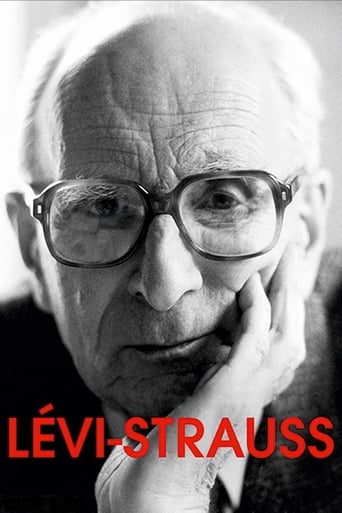 The Lévi-Strauss Century
 A Vida de uma Aldeia Bororo
 Une approche de Claude Lévi-Strauss
 Cattle Work in the Corral of a Farm in Southern Mato Grosso
 Aldeia de Nalike
 Cerimônias Fúnebres entre os Índios Bororo
 Behind the Masks
Frequently asked questions
- What are Claude Lévi-Strauss's best-known movies and series?
- Claude Lévi-Strauss is best known for Um Olhar Inquieto: O Cinema de Jorge Bodanzky (2026), Somewhere, Someone (1972), Mad Mimes (2012), The Lévi-Strauss Century (2016), A Vida de uma Aldeia Bororo (1935), ranked by how popular each title is on TMDB.
- When was Claude Lévi-Strauss born?
- Claude Lévi-Strauss was born on 28 November 1908 in Brussels, Belgium.
Which Claude Lévi-Strauss title should you watch?
Say what you are in the mood for and Free Movies Baby picks one, with where to watch it.
Ask Free Movies Baby